Follow Diloya, take you to appreciate industry trends, real-time information
 Home > News > Industry News
An automatic aluminium tins cans baling machine is a hydraulic recycling system that receives sorted used beverage cans (UBCs), compresses them into dense, uniform bales and ejects the finished blocks with minimal manual handling. For recycling yards, material recovery facilities and can-processing plants, it reduces the space occupied by loose cans, simplifies storage and truck loading, and creates a more consistent feedstock for downstream recyclers or secondary aluminium producers.
|
Aluminium cans are light, valuable and highly recyclable—but their low bulk density makes loose handling inefficient. The commercial problem is not simply how to crush a can. It is how to turn an unpredictable stream of loose, springy UBCs into a repeatable industrial output without creating a labour, safety or maintenance bottleneck.
This guide follows that material from arrival to dispatch. It explains how an automatic can baler works, what equipment belongs around it, which figures matter when comparing machines and what information DILOYA needs to configure a suitable line.
Buyers use several phrases for the same equipment family:
automatic aluminium can baler;
UBC baling machine or used beverage can baler;
aluminium tin can compactor;
hopper-type metal baler;
hydraulic cans press; and
two-ram aluminium can baling machine.
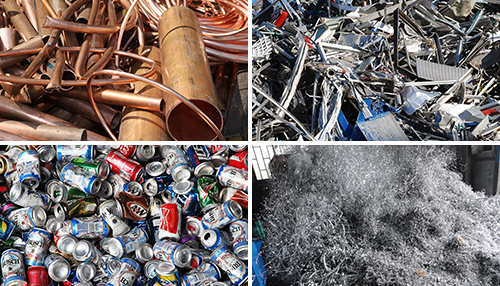
Strictly speaking, aluminium cans and tin cans are not the same material. Beverage cans are commonly aluminium, while many food “tin cans” are tin-plated steel. That distinction matters because alloy value, sorting method, bale density and the buyer’s acceptance specification may differ. In this article, the phrase reflects the way international buyers search; the recommended practice is still to separate aluminium UBCs from ferrous cans before baling whenever the receiving recycler requires a clean aluminium grade.
Loose cans trap a large amount of air. They fill cages, bunkers and trucks long before the vehicle reaches an efficient payload. A baler changes the material’s physical form so it can be moved and sold more consistently.
The main operational gains are:
Less storage volume. Dense bales use yard and warehouse space more effectively.
More efficient handling. Uniform blocks are easier to count, stack, weigh and load than loose cans.
Lower handling cost per tonne. Fewer loose-material movements can reduce forklift, container and labour demand.
More predictable output. Controlled bale dimensions and density help downstream buyers plan handling and furnace charging.
Cleaner material control. A defined sorting and baling process makes contamination easier to monitor.
The environmental case is also strong. The Aluminum Association describes secondary aluminium production as around 95% more energy-efficient than primary production. Baling does not create that saving by itself, but it is an important logistics step that helps collected UBCs reach a recycling process efficiently.
 |  |
UBCs may arrive from deposit-return systems, municipal collections, beverage plants, sorting facilities, hospitality operations or scrap dealers. At receiving, record the source, gross weight, estimated contamination and moisture condition. This creates a baseline for yield and supplier quality.
Remove plastic bottles, glass, paper, batteries, pressurised containers and other unsafe or unwanted items. A magnet can separate ferrous steel cans from aluminium. Eddy-current sorting may be used in larger mixed-material systems to recover non-ferrous aluminium.
Do not feed sealed aerosol cans, gas cylinders, batteries or containers holding flammable residues into a standard can baler. Site-specific risk assessment, guarding and operating procedures remain essential.
Residual liquid increases mess, corrosion risk and shipping weight without adding metal value. Allow cans to drain where required. If the plant uses a perforator, crusher or shredder upstream, confirm that the chosen particle size and flow match the baler chamber and the downstream buyer’s specification. Pre-crushing is not automatically necessary for every line.
Material enters the baler through a hopper. Feeding can be manual at small scale, but an automatic line usually uses a belt conveyor, chain conveyor, tipping bin or grab. Level sensors and PLC logic can start and stop the feeder to prevent overfilling and idle running.
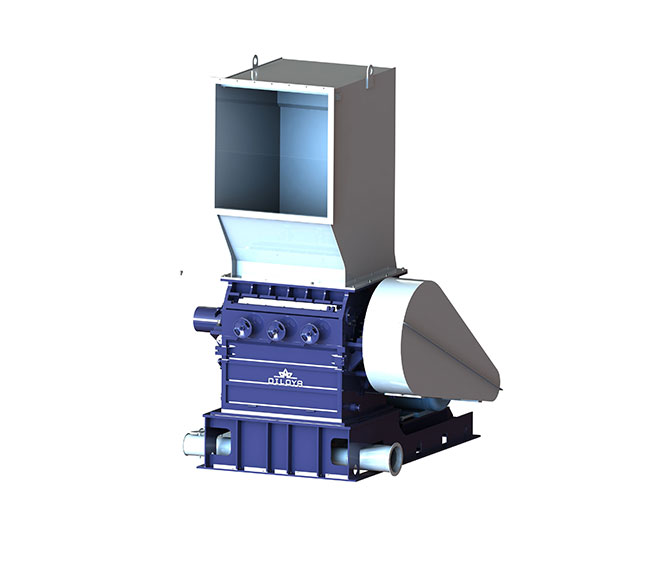
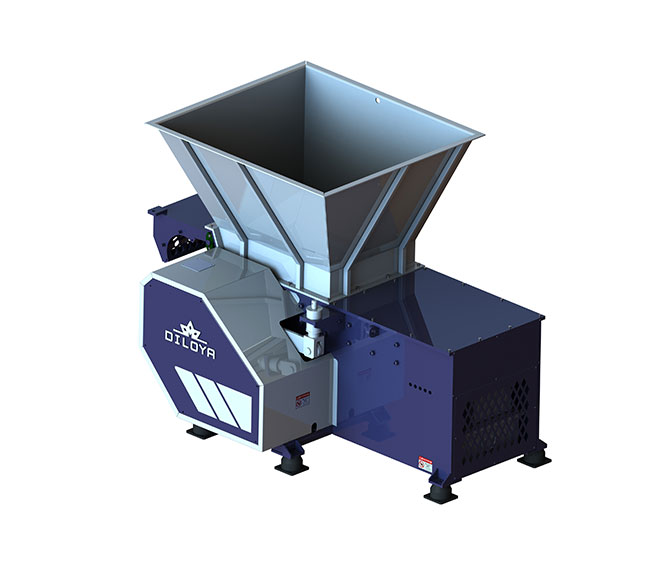
The large CMS125 hopper supports batch or integrated feeding. Final guarding and line layout should match the customer’s site and local safety requirements.
The hydraulic system drives one or more rams to compact the loose cans inside the chamber. A two-ram arrangement compresses the material in coordinated directions, helping form a dense, stable block from springy light metal. The required pressure and cycle sequence depend on feed composition, chamber size and target bale specification.
When the programmed compression cycle is complete, the machine ejects the bale to a roller table or receiving area. Depending on the machine design and material behaviour, the bale may be self-supporting or may require strapping. The correct choice should be confirmed through a material test and consultation with the intended bale buyer.
Check and record:
bale dimensions and weight;
calculated bulk density;
spring-back or loss of shape;
moisture and visible contamination;
cycle time and bales per hour; and
hydraulic temperature, pressure and alarm history.
Do not judge a machine by nominal press force alone. A useful output is a bale that meets the recycler’s specification consistently at the required throughput.
Store bales on stable, level ground and follow a documented stacking limit. Keep travel paths clear and use handling equipment rated for the bale weight. Build container or truck-loading plans around verified bale dimensions, actual weight and local transport limits—not theoretical maximums.
An automatic cycle can be summarised as:
Detect material → feed the chamber → close/interlock → compress → confirm pressure or position → eject bale → count output → repeat.
The PLC coordinates sensors, hydraulic valves, the feeder and safety interlocks. The operator typically selects a recipe, monitors alarms and verifies finished-bale quality rather than manually controlling every ram movement.
Core assemblies normally include:
feed hopper and optional conveyor;
reinforced compression chamber;
main and secondary hydraulic rams;
hydraulic pump, valves, reservoir and cooling system;
PLC, electrical cabinet, sensors and operator interface;
interlocked access points and emergency-stop circuit; and
bale outlet with roller conveyor or other handling system.
“Automatic” should be defined in the quotation. Ask whether it covers only the compression cycle or also material feeding, bale ejection, strapping, weighing, counting and line integration.
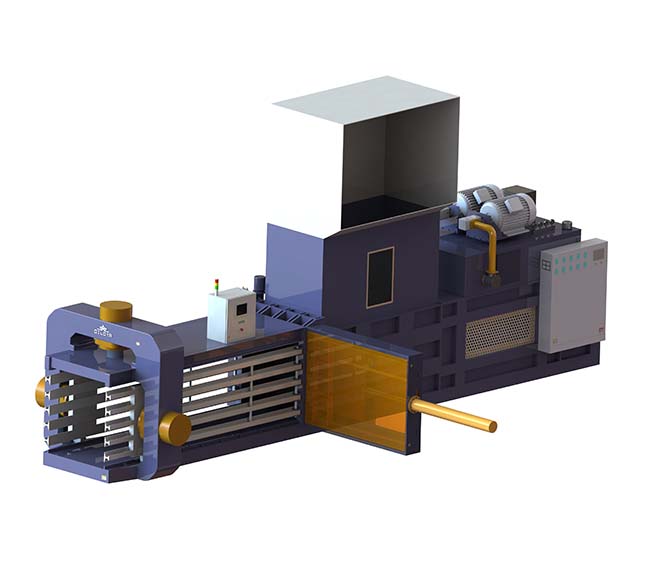
DILOYA CMSH125 uses a large top hopper, hydraulic compression body, independent power unit and roller discharge. This layout is intended to receive low-density material and produce compact blocks with less manual handling than a basic batch press.
Because UBC streams vary significantly, DILOYA configures the machine around the application rather than publishing one universal performance promise. Before recommending the final arrangement, the engineering team should confirm:
aluminium-only UBCs, steel cans or a defined mixture;
loose, flattened, shredded or baled incoming condition;
average and peak tonnes per hour;
target bale size, weight and density;
required feeding method and available floor space;
local voltage and frequency;
ambient temperature and cooling conditions;
downstream buyer or smelter acceptance requirements; and
required safety standard and language.
This application-based approach prevents two common purchasing errors: buying a chamber that is too small for peak feed volume, or paying for press capacity that the upstream sorting and conveyor system cannot supply.
Low, intermittent volume | Manual or semi-automatic baler may be more economical |
Regular UBC stream with limited labour | Hopper feed, PLC cycle and automatic bale ejection |
High-volume MRF or can-processing line | Metered conveyor, level sensing and coordinated line controls |
Springy cans requiring stable dense blocks | Two-ram compression and application-specific pressure settings |
Mixed aluminium and steel cans | Upstream magnetic separation before aluminium baling |
Hot climate or multi-shift duty | Appropriately sized oil cooling and temperature monitoring |
Strict buyer specification | Trial bales, weighing and documented density/contamination checks |
The best machine is not automatically the one with the largest motor or highest nominal force. It is the system whose feed rate, cycle time, bale quality, power demand and maintenance plan fit the entire plant.
Real throughput on your material. Ask for tonnes per hour and bales per hour using feedstock similar to yours.
Bale specification. Confirm dimensions, weight range, density and whether wire or strap is required.
Feed opening and hopper volume. These determine how smoothly the baler accepts bulky cans.
Cycle time under load. An empty-cycle figure does not represent production output.
Installed power and energy use. Compare kWh per tonne where test data are available, not motor rating alone.
Wear and service access. Check chamber liners, seals, filters, hose routing and access for inspection.
Controls and safety. Confirm PLC brand, interlocks, emergency stops, guarding, manuals and conformity documentation required at the destination.
Use site data rather than a generic payback claim.
Annual benefit = freight savings + handling/labour savings + storage savings + any bale-price uplift − added electricity − maintenance − consumables.
Then:
Simple payback period = installed project cost ÷ annual net benefit.
Collect at least four weeks of baseline information: tonnes handled, loose-load density, truck or container cost, labour hours, storage footprint and rejected-load or contamination cost. Request a trial bale where possible. A credible supplier should state the assumptions behind a capacity or ROI estimate.
Only trained personnel should operate or service the baler. Follow the supplied manual and local regulations. Isolate and lock out all energy sources before entering a guarded area or clearing a jam.
inspect for oil leaks, damaged hoses and loose fittings;
test emergency stops and interlocks according to the site procedure;
keep sensors and the bale discharge path clear;
check oil temperature, pressure and alarm messages; and
inspect bales for shape, density and contamination changes.
inspect chamber wear surfaces, guides and fasteners;
check hydraulic oil level and filter indicators;
inspect cables, guards and conveyor tracking; and
clean around the power unit without introducing contaminants.
Use the manufacturer’s schedule for hydraulic oil analysis or replacement, filters, seals, wear plates, pump inspection and electrical checks. Trend cycle time and oil temperature: a gradual change can reveal a developing restriction, leakage or cooling problem before output stops.
Problems | Possible reason |
Bale springs back or breaks apart | Low effective pressure, unsuitable cycle recipe, mixed feed, excess moisture or wrong bale format |
Throughput below target | Irregular feeding, upstream sorting bottleneck, low pump flow, long idle delays or unrealistic empty-cycle comparison |
Hydraulic oil runs hot | Dirty cooler, low oil level, incorrect viscosity, continuous relief-valve operation or undersized cooling |
Inconsistent bale weight | Uneven feed, sensor issue, changing contamination or insufficient recipe control |
Frequent jams | Oversized foreign objects, uncontrolled feeding, poor feed preparation or worn chamber components |
Troubleshooting must be carried out by qualified personnel using the electrical and hydraulic documentation. Never bypass an interlock to restore production.
FAQ:
It is a hydraulic system that automatically performs a programmed compression and bale-ejection cycle for sorted aluminium cans or other approved light metal feedstock. Feeding, weighing and strapping may be manual or automated depending on the line configuration.
They can be physically compacted in some metal balers, but they should not automatically be mixed. Many downstream buyers require aluminium UBCs to be separated from ferrous steel cans. Confirm the buyer’s specification and use magnetic separation where necessary.
Not always. Loose or pre-flattened UBCs can often be fed directly to a suitable hopper-type baler. Shredding may improve a specific process but adds equipment, energy and maintenance. Decide based on trial results and downstream requirements.
Size the complete line for the average and peak incoming tonnage, operating hours, feed density and desired reserve capacity. Conveyor and sorting capacity must match the baler; otherwise the nominal baler output cannot be achieved.
Density depends on alloy mix, contamination, moisture, initial can condition, chamber geometry, pressure and cycle settings. DILOYA should test representative material before confirming a guaranteed range.
Some compressed metal blocks remain stable without tying; others require wire or strapping for handling and transport. The correct arrangement depends on material behaviour, bale dimensions and buyer rules.
Provide material photos or video, composition, tonnes per hour or month, operating hours, target bale size or buyer specification, feeding method, voltage/frequency, floor plan, destination and required certification.
Yes. Include your test material and acceptance criteria in the order agreement so the video can document the agreed cycle, bale dimensions, weight and other verifiable results.
An automatic baler is most valuable when it is designed as part of the full process: receive, separate, drain, feed, compress, verify, store and dispatch. When each stage is matched, loose UBCs become a measurable industrial product instead of a growing logistics problem.
For a DILOYA CMSH125 application review, send:
photos or a short video of the cans;
aluminium/steel composition and contamination level;
required tonnes per hour and operating hours;
preferred bale size or downstream buyer specification;
site voltage and layout; and
destination country.
Request a configured solution: Contact DILOYA or email info@diloya.com. Test-video support and custom configuration are available according to the agreed project scope.
 Product
Solution
Application
Support
News
About us
Contact Us
Product
Solution
Application
Support
News
About us
Contact Us
 Phone: +86 152 2134 7650
 E-mail: info@diloya.com
 Address: No. 888, West Two HuanHu Road, Shanghai Free Trade Zone, China


All rights reserved by DILOYA GROUP
Technical support: E-Power Network